
Project Specs
Gokyo Bistro was experiencing growing demand, but manual processes for
table management, order tracking, and delivery coordination were
creating operational bottlenecks. Customers faced longer wait times,
and staff struggled to manage increasing requests efficiently.
I built a restaurant management platform that centralizes
reservations, orders, and delivery operations, helping the restaurant
serve more customers with less friction.
UX Designer
Feb - Mar 2026
User Research
UI/UX Design
Prototyping
Figma
Context

As customer demand grows, managing reservations, table availability,
orders, and delivery requests becomes increasingly difficult. What was
once manageable through manual processes can quickly lead to long wait
times, missed opportunities, and frustrated customers.
Gokyo Bistro, a popular restaurant in Jhamsikhel, Lalitpur, faced this
exact challenge. The restaurant needed a digital solution to
streamline its operations and accommodate its growing customer base.
Problem
Gokyo Bistro experienced a significant increase in dine-in customers and home delivery requests. Without a centralized system, staff struggled to efficiently manage table availability, customer orders, and reservations, resulting in overcrowding, longer waiting times, and lost business opportunities when customers were turned away due to full occupancy.
Goal
Our goal was to design a centralized restaurant management system that improves table allocation, streamlines order processing, supports home delivery requests, and enhances the overall customer experience while reducing operational bottlenecks.
Design Solution
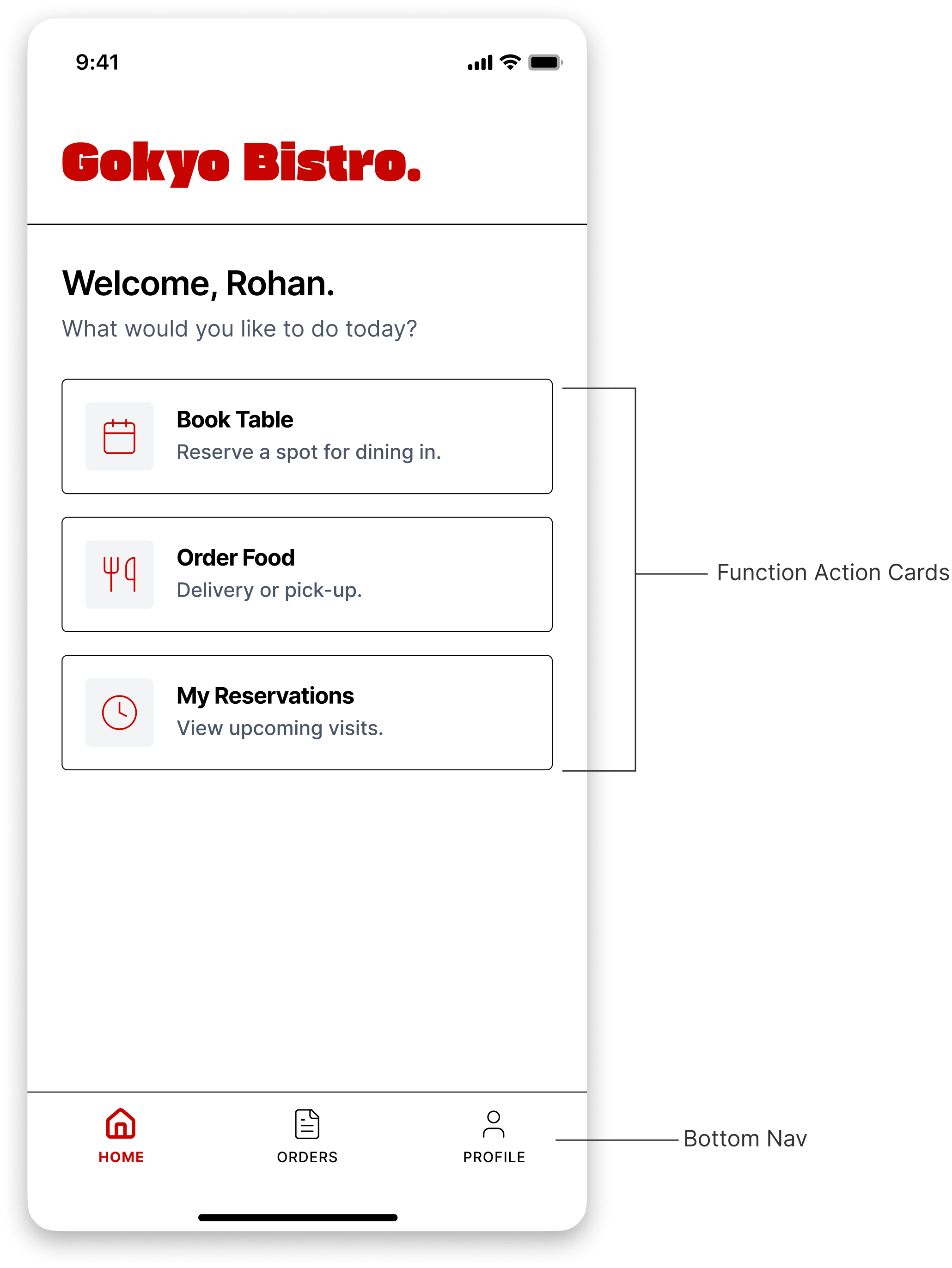
Gokyo Bistro users may include busy professionals, regular diners, and users of varying tech comfort levels.
To ensure the interface is accessible, I kept the layout simple, action-oriented, and visually structured.
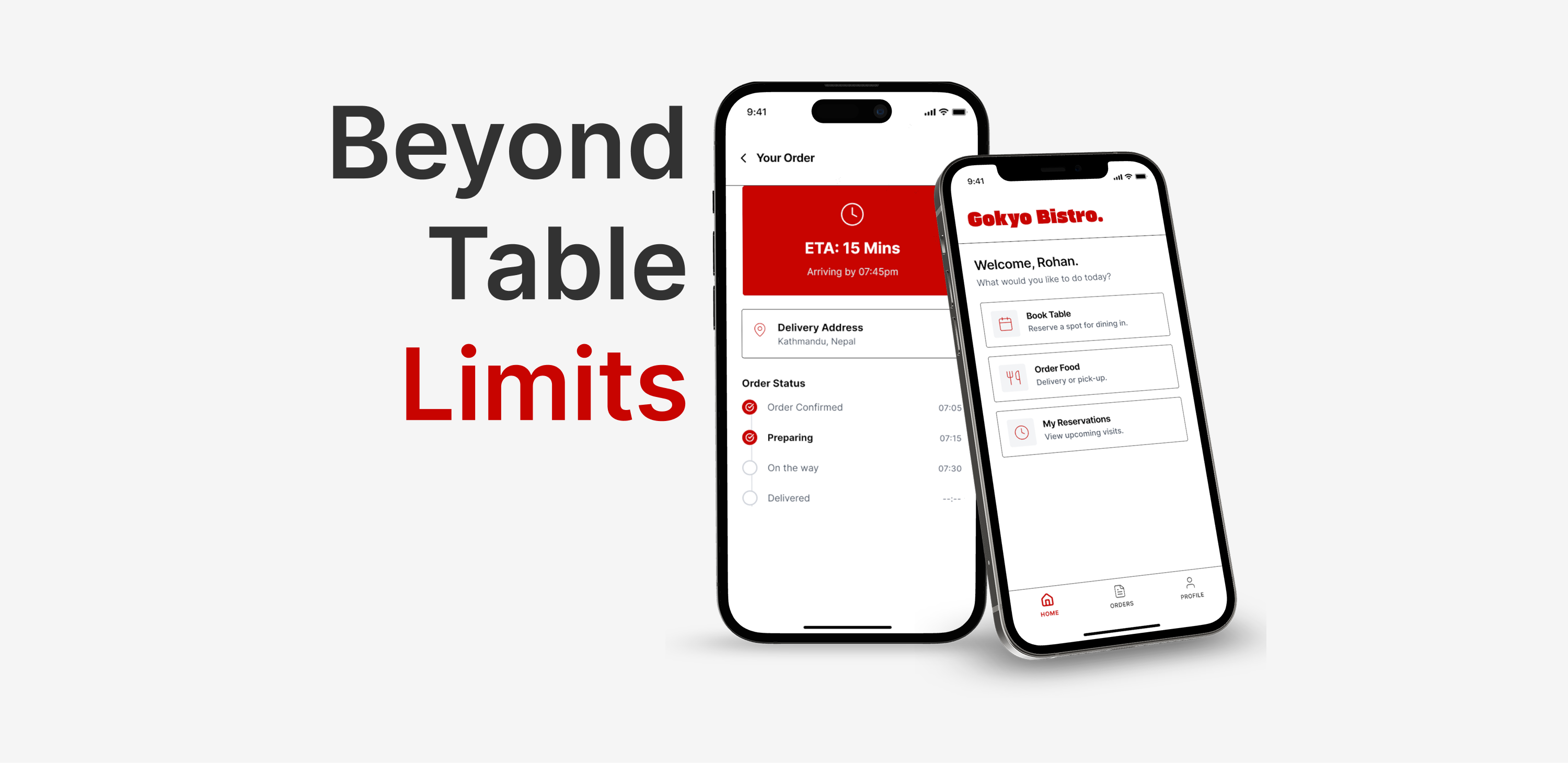
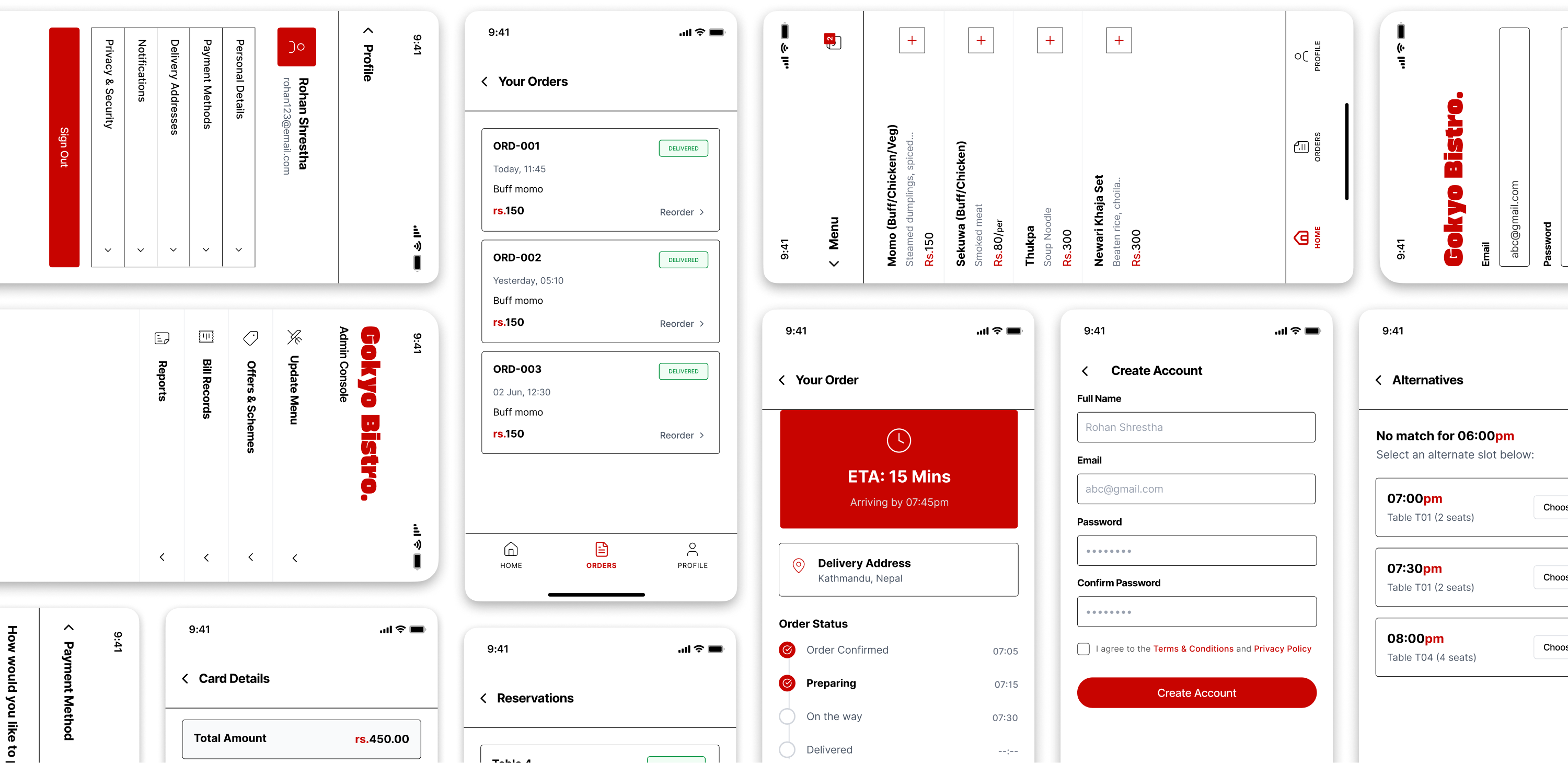
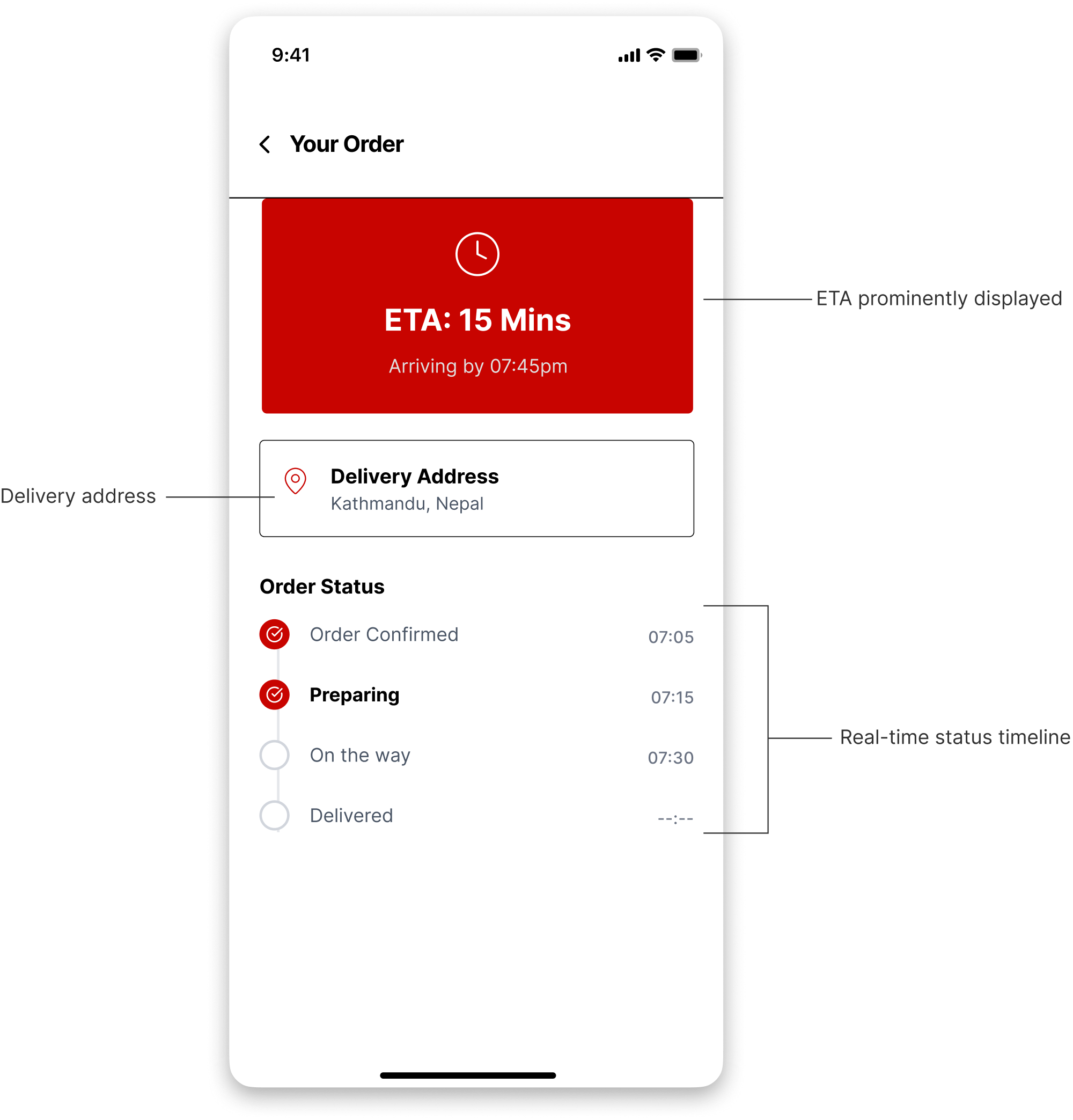
The tracking screen displays ETA and a timeline with timestamps (Confirmed → Preparing → On the way → Delivered) so customers can self-track orders without calling the restaurant.
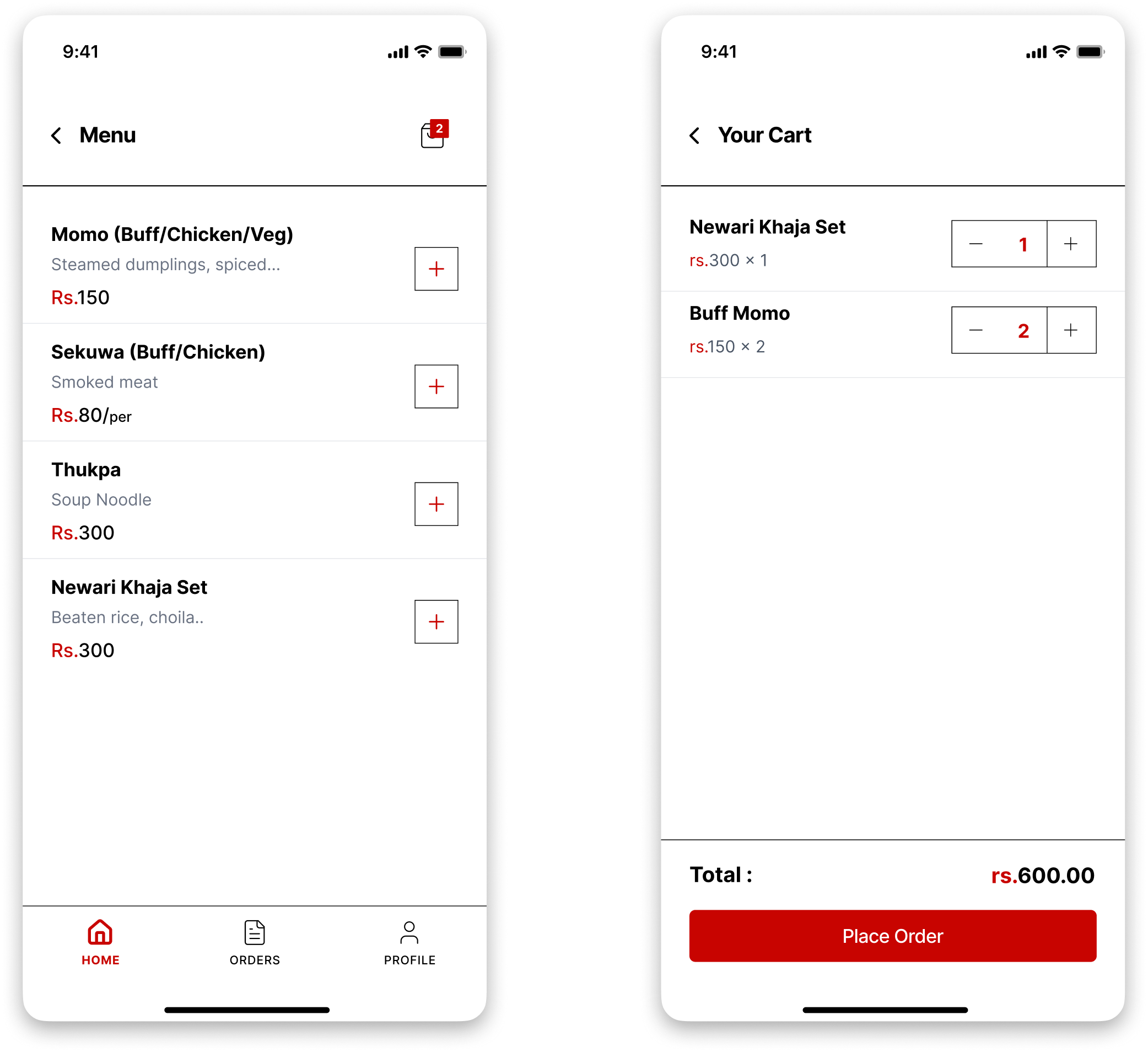
Restaurant customers need to browse menus and place orders with minimal effort.
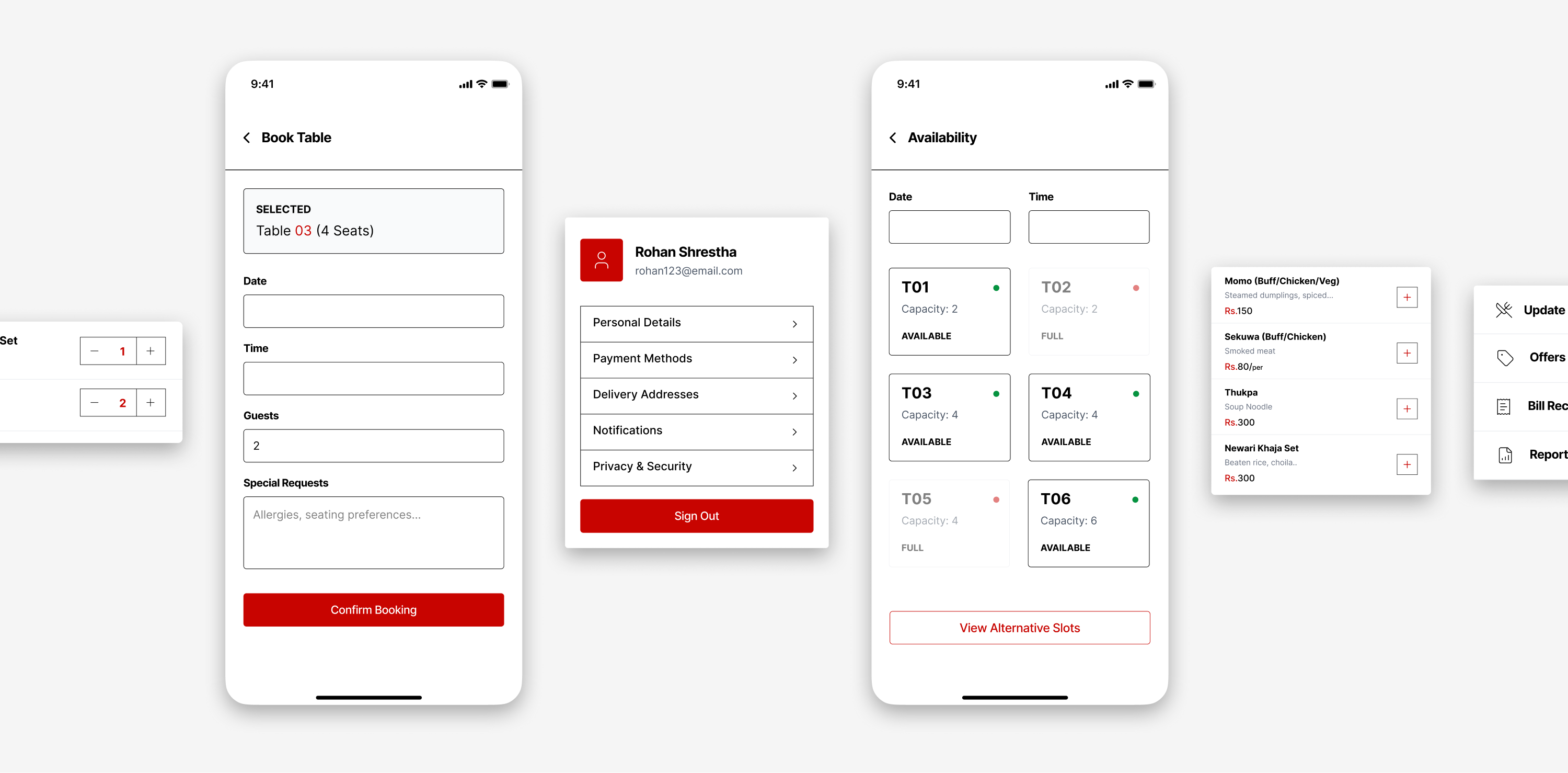
The layout prioritizes essential information, keeps actions visible, and presents menu items in a clear, easy-to-scan structure.
Output
The project successfully transformed several manual restaurant
processes into a unified digital experience. Customers can easily
reserve tables and place orders, while staff can manage reservations,
menu items, and operations from a centralized dashboard.
The final product improves operational efficiency,
supports business growth, and delivers a smoother experience for both
customers and restaurant staff.